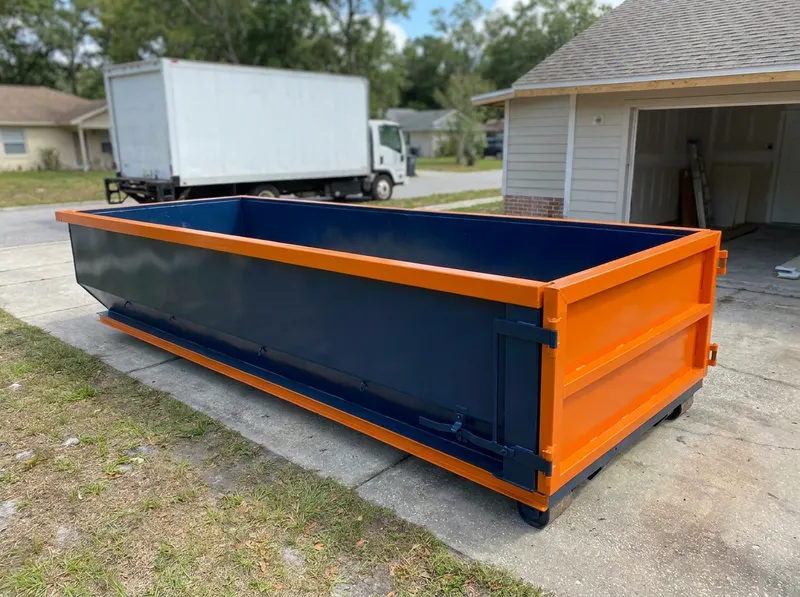
Haulport Dumpster Rental provides Construction & C&D Dumpster Rental in Gainesville, FL. A C&D dumpster is a roll-off container for construction and demolition debris only, it is not a junk-removal service, so the crew…
Haulport Dumpster Rental provides Construction & C&D Dumpster Rental in Gainesville, FL. A C&D dumpster is a roll-off container for construction and demolition debris only, it is not a junk-removal service, so the crew drops the empty bin and you or your contractor load it. Haulport Dumpster Rental stocks five sizes: the 10-yard ($595) holds roughly 4 pickup-truck loads, the 15-yard ($650) about 6, the 20-yard ($695) about 8, the 30-yard ($795) about 12, and the 40-yard ($895) about 16. Pricing is flat and all-in, the number quoted covers delivery, the rental window, pickup and disposal, with no hidden tonnage or fuel fee added after the fact. The U.S. EPA reports that construction and demolition materials make up more than 600 million tons of debris a year nationally, and most of that weight is exactly what these bins are sized to carry.
Step 1: match the bin to the job. A single-room bathroom remodel in Duckpond or a kitchen tear-out in the Historic District fits a 10-yard or 15-yard. A full asphalt-shingle roof tear-off on a ranch home in Golfview or Serenola usually fits a 20-yard, roofing debris is dense, so a smaller container loaded with shingles can hit its weight limit before it looks full. A whole-home gut renovation or a new-build framing cleanup in Haile Plantation, Oakmont or Forest Ridge typically needs a 30-yard or 40-yard. The trade-off is simple: a larger bin holds more debris but needs more driveway or staging room, and the 40-yard's longer footprint matters on the tighter lots around Pleasant Street, Northwood and Highland Court Manor. Step 2: pick the drop spot, a flat, firm surface clear of low wires and gates. Step 3: load low and even so the hauler can legally move it; the federal motor carrier weight rules cap what a loaded roll-off truck can carry, which is why debris must sit below the fill line.
Heavy, dense material changes the math. Clean concrete, brick, block, dirt and asphalt are far heavier per cubic yard than wood or drywall, so a dedicated 10-yard is the right call for a concrete driveway or patio demo rather than a huge bin you cannot legally fill. Separating a clean concrete load also supports recycling, the Construction & Demolition Recycling Association notes that concrete, metal and clean wood are among the most recoverable job-site materials, and material recovery resources list drop points across Florida. Certain items cannot ride in a C&D bin: liquids, wet paint, solvents, asbestos-containing material and other household hazardous waste are prohibited, and friable asbestos abatement is governed by the Florida Department of Environmental Protection and must be handled by a licensed abatement contractor, never dropped in a dumpster.
Contractors loading a Gainesville site should keep the work zone clear per OSHA jobsite safety guidance and watch the 1926.252 debris disposal standard, which requires a planned means of debris removal rather than open piling. If a bin must sit on a public street rather than private property, common on the narrow lanes near the University of Florida, Depot Park or Kanapaha, the City of Gainesville or Alachua County right-of-way rules may require a permit, so place the container on the driveway or lot whenever possible. For large demolition projects, EPA's large-scale residential demolition guidance explains the waste-handling steps before the first wall comes down.
Every job gets a firm, written price after an on-site visit.
Tell us about your construction & c&d dumpster rental job in Gainesville and we'll send a clear, written quote, usually the same day.
 Haulport Dumpster Rental