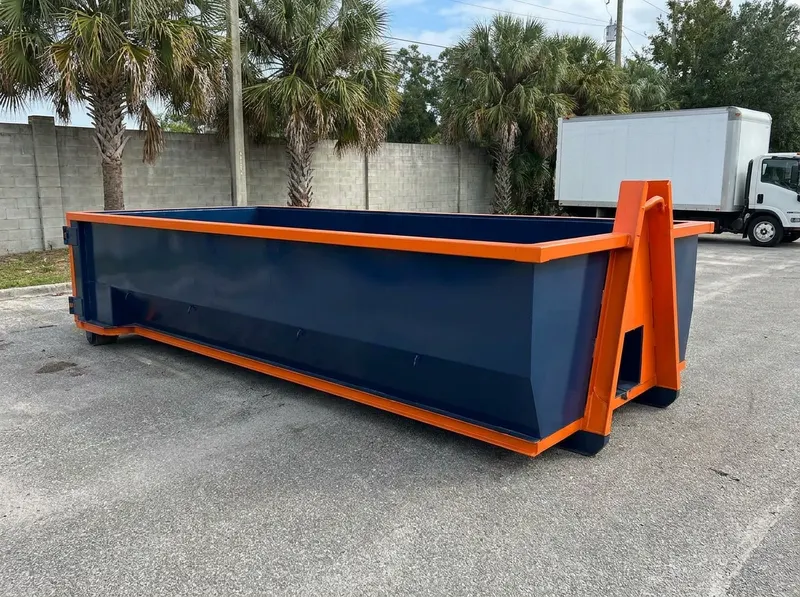
Haulport Dumpster Rental provides Contractor & Commercial Accounts in Gainesville, FL. A Contractor & Commercial Account differs from a one-time homeowner rental in how it is billed and scheduled, not in the equipment.…
Haulport Dumpster Rental provides Contractor & Commercial Accounts in Gainesville, FL. A Contractor & Commercial Account differs from a one-time homeowner rental in how it is billed and scheduled, not in the equipment. The same roll-off boxes serve both, but account pricing is set upfront per haul so a general contractor running three jobs in Haile Plantation and Oakmont can budget each pull at a known number: $595 for a 10-yard, $795 for a 30-yard, $895 for a 40-yard. A dumpster rental is not junk removal, the crew loads the bin themselves and Haulport Dumpster Rental delivers, swaps, and disposes. That distinction matters most on commercial sites where labor is the crew's own and the schedule is tight.
Size selection follows the debris, not the square footage of the building. A 10-yard holds roughly 4 pickup-truck loads and suits a single-bath remodel or a punch-list cleanout; a 30-yard, at about 12 loads, fits a roof tear-off or a whole-house gut; a 40-yard handles bulky, lightweight volume like siding and framing on larger commercial builds. The trade-off is footprint versus capacity, a 40-yard needs roughly 22 feet of clear staging and a firm pad, which is why a 20-yard often wins on cramped infill lots in Duckpond or Pleasant Street where street width and setbacks limit placement. Roofing crews running dense shingle loads usually stay in the 15-yard or 20-yard range because tear-off debris is heavy, and a flat-rate account means that weight carries no surprise tonnage line. Heavy inert loads like concrete and dirt should be kept to their own bin; the U.S. Environmental Protection Agency's construction and demolition materials program notes that clean concrete and brick are often recoverable as recycled aggregate when kept separate.
Scheduling is the practical reason crews open an account. Step 1, the account is set up by phone with the company name, billing contact, and typical bin sizes. Step 2, a drop is ordered per job with the exact address, a Serenola new-build or a Northwood renovation. Step 3, the bin lands on the staging spot, placed on boards where a driveway or finished slab needs protecting. Step 4, a full bin is swapped for an empty on request so the job never stalls on a debris pileup. Step 5, each haul invoices at its flat rate. Keeping a jobsite clear of debris also supports OSHA's housekeeping requirements under 29 CFR 1926.25, which calls for scrap and waste removal during the course of construction.
Commercial work brings its own waste rules. Loads must stay free of prohibited materials, Alachua County follows Florida regulations on what a roll-off can legally hold, and household and jobsite hazardous waste such as solvents, paints, and adhesives cannot go in the bin. Tires, appliances with refrigerant, and certain electronics are also excluded; the EPA Section 608 rule governs refrigerant handling, and old TVs and monitors fall under e-waste guidance tracked by Earth911. For demolition work, asbestos abatement is regulated separately under the EPA Asbestos NESHAP and must be cleared before debris enters a general bin. Crews doing exterior or landscape clearing near sensitive ground, jobs bordering Paynes Prairie Preserve State Park or the Kanapaha wetlands, should separate yard debris, which composts rather than landfills under the USDA urban wood and green-waste guidance. Shingle-heavy roofing debris is itself partly recoverable; the National Association of Home Builders and the National Roofing Contractors Association" both publish C&D diversion and jobsite-handling material for member crews.
Placement on commercial and residential infill jobs often needs a permit when the bin sits on a public street rather than private property. The City of Gainesville right-of-way rules apply in older grid neighborhoods like Duckpond, Pleasant Street, and Golfview where there is no driveway room; a private pad at a Forest Ridge or Highland Court Manor build site needs no permit. Jobs near the University of Florida, Ben Hill Griffin Stadium, or Santa Fe College campus edges may face additional access limits during event windows, so staging is confirmed per address. Spill and contamination handling on larger sites tracks guidance from the NIOSH construction program.
Every job gets a firm, written price after an on-site visit.
Tell us about your contractor & commercial accounts job in Gainesville and we'll send a clear, written quote, usually the same day.
 Haulport Dumpster Rental